
Sri Lanka has a rich and ancient history that spans more than 2,500 years. According to historical chronicles such as the Mahavamsa, the island’s recorded history began with the arrival of Prince Vijaya in the 6th century BCE. Over the centuries, powerful kingdoms such as Anuradhapura, Polonnaruwa, and Kandy flourished, developing advanced irrigation systems, magnificent temples, and a unique culture strongly influenced by Buddhism. From the 16th century, Sri Lanka came under the control of European colonial powers, including Portugal, Netherlands, and later United Kingdom, which ruled the island as Ceylon until independence was achieved in 1948. Today, Sri Lanka is an independent nation known for its diverse cultural heritage, ancient landmarks, and strategic location in the Indian Ocean.
Central Sri Lanka:
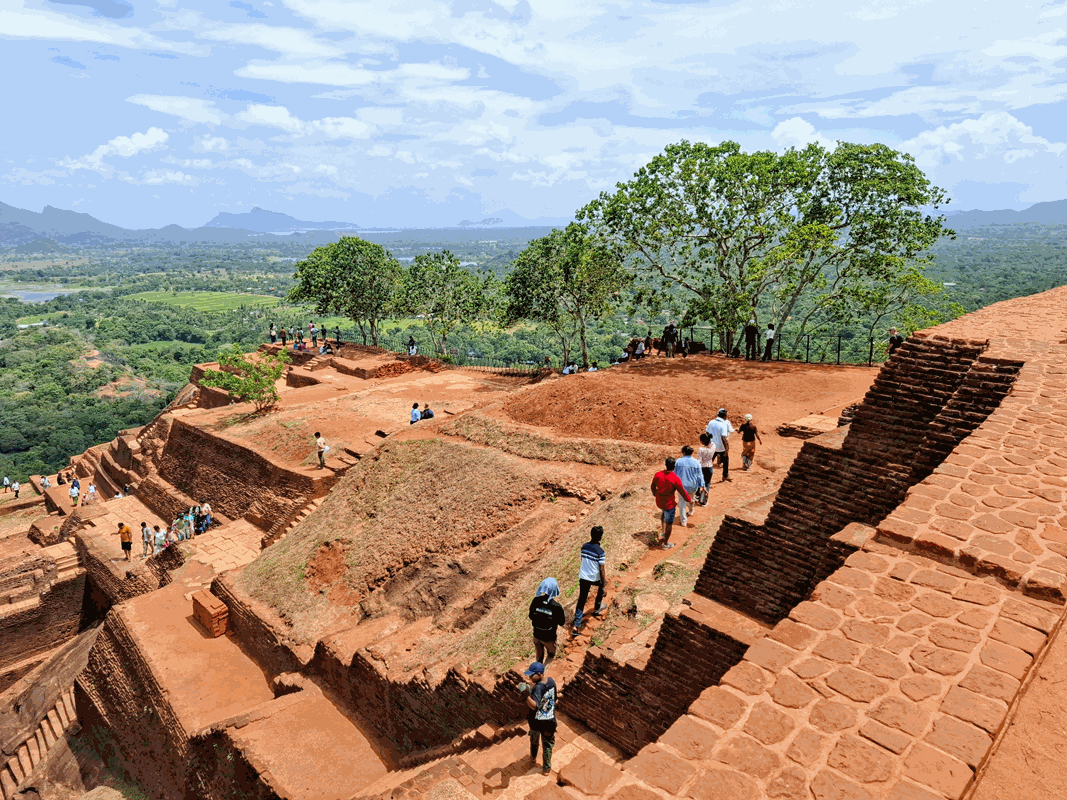
Located just a short drive from each other in Sri Lanka’s Cultural Triangle, the Sigiriya Lion Rock Fortress and the Dambulla Cave Temple represent two awe-inspiring pinnacles of ancient South Asian engineering, artistry, and spirituality.
Sigiriya Lion Rock Fortress:
Sigiriya, the number one tourist destination in the country, is a dramatic 200-meter-high granite citadel, was transformed by King Kashyapa in the 5th century into a royal palace complete with advanced water gardens, vivid frescoes of celestial maidens, and a massive gateway carved in the likeness of a colossal lion.
Dambulla Cave Temple:
Just a few miles away from Sigiriya, Dambulla offers a profound shift in atmosphere. This vast, beautifully preserved cave monastery complex has served as a sacred pilgrimage site for over 22 centuries. Carved directly into a massive rock overhang, its five distinct caves are filled with more than 150 serene Buddha statues and wrapped in masterfully detailed religious murals that stretch across the naturally curving rock ceilings.
Colombo:
Colombo, the vibrant commercial capital of Sri Lanka, seamlessly weaves together its rich colonial past, diverse spiritual heritage, and bold modern future. The city’s skyline is a striking mix of old and new, anchored by the ultra-modern Colombo Lotus Tower rising above the bustling streets, while the historic Colombo Fort Old Clock Tower stands as a timeless sentinel of British colonial architecture. Just a short distance away, the majestic Presidential Secretariat overlooks the sweeping promenade of Galle Face Green, a popular oceanfront urban park where locals gather to fly kites and enjoy the sea breeze.
Colombo’s cultural landscape is deeply spiritual, featuring the striking red-and-white brickwork of the Jami Ul-Alfar Mosque (Red Masjid) in Pettah, the sprawling and eclectic Gangaramaya Temple, and its tranquil, floating counterpart, the Seema Malakaya Temple on Beira Lake. For those seeking quiet reflection amidst nature, the nearby Viharamahadevi Park offers a lush, green sanctuary right in the heart of the city. Finally, the journey through Colombo is completed by indulging in its culinary evolution at restaurants like the Ceylon Curry Club, which beautifully modernizes traditional Sri Lankan flavors, making the city a true feast for both the eyes and the palate.
Showcasing:
- Gangaramaya Temple
- Lotus Tower
- Seema Malakaya Temple
- Viharamahadevi Park
- Galle Face Green
- Jami Ul-Alfar Mosque (Red Mosque)
- Fort Old Clock Tower
- Ceylon Curry Club
- Presidential Secretariat
Galle:
Located on the southwest coast of Sri Lanka, the Galle Dutch Fort is a magnificent UNESCO World Heritage Site originally built by the Portuguese in 1588 and extensively fortified by the Dutch during the 17th century. This sprawling 90-acre coastal citadel seamlessly blends European architectural styles with South Asian traditions, enclosing a vibrant grid of cobblestone streets, colonial-era villas, and historic churches.
Standing proudly on the fort’s southeastern ramparts against a backdrop of palm trees and the roaring Indian Ocean is the iconic Galle Lighthouse. Rebuilt in 1939 after a fire destroyed the original 1848 British structure, this onshore light station stands 26.5 meters (87 feet) tall and remains a fully operational navigational aid. Together, the ancient stone bastions of the fort and the gleaming white tower of the lighthouse form Sri Lanka’s most recognizable coastal landmark, bridging centuries of maritime history with a bustling, modern cultural hub.
Showcasing:
- Unawatuna Beach
- Galle Black Fort and Zwart Bastion
- Galle Dutch Fort
- Galle Fort Area
- Galle Fort Clock Tower
- Galle Lighthouse
- Hikkaduwa Beach